Best eSIM for Thailand in 2026
Thailand has fast 4G/5G in cities and surprisingly decent coverage in remote areas. Here's what to look for in a Thailand eSIM.
Thailand's mobile network
Thailand runs on three main networks: True Move H, AIS, and DTAC (now merged into NT). Coverage in Bangkok, Chiang Mai, Phuket, Koh Samui, and Pattaya is strong, with 5G active in Bangkok and increasingly in major tourist areas. For the average trip, data quality is not a concern in urban areas.
Away from cities, coverage holds up reasonably well on the main roads and in towns. The Thai government has pushed for nationwide coverage, and the big carriers have invested in rural infrastructure. You're unlikely to be completely cut off anywhere you'd normally visit.
When a physical SIM is worth considering
7-Eleven and convenience stores at Suvarnabhumi (BKK) and Don Mueang (DMK) airports sell prepaid SIMs for AIS and True Move H. Prices are low, typically around 300-400 THB (about $8-11) for 15-30 GB and 15-30 days of validity. If you're staying two weeks or more, this is genuinely good value.
The downside: airport SIM counters can have long lines on busy arrival mornings, and you need a passport. If your flight arrives late or you have checked bags to collect, the timing can be annoying. For short trips (under a week) or if you want to arrive connected immediately, eSIM makes more sense.
What to look for in a Thailand eSIM
Hotspot support is the big one. Bangkok traffic is notoriously bad, and using Google Maps while simultaneously tethering to a laptop (if you're working) requires hotspot. Many Thailand eSIM plans from international providers disable it or limit it to 1-2 GB per day before throttling. Check this before buying, not after.
Speed matters for navigation and mapping. Bangkok without Google Maps is a bad time. You want a plan with full-speed 4G/5G, not one that throttles to 384kbps after the first GB. Read the plan details carefully.
Validity: most tourists spend 7-14 days. Buy a plan with at least a few days of buffer so you're not scrambling to top up on your last day.
How much data to expect to use
Thailand is very navigation-heavy. Bangkok's streets, the back alleys of the Old City in Chiang Mai, directions to temples you've never been to before: you'll have Maps open constantly. Expect 1-2 GB per day if you're actively exploring. A quieter beach stay (Koh Samui, Krabi) with resort WiFi at night will be closer to 500 MB per day.
Social media and video content add up. If you're posting to Instagram or watching YouTube in the evening, add another 1-2 GB per day.
Island and remote coverage
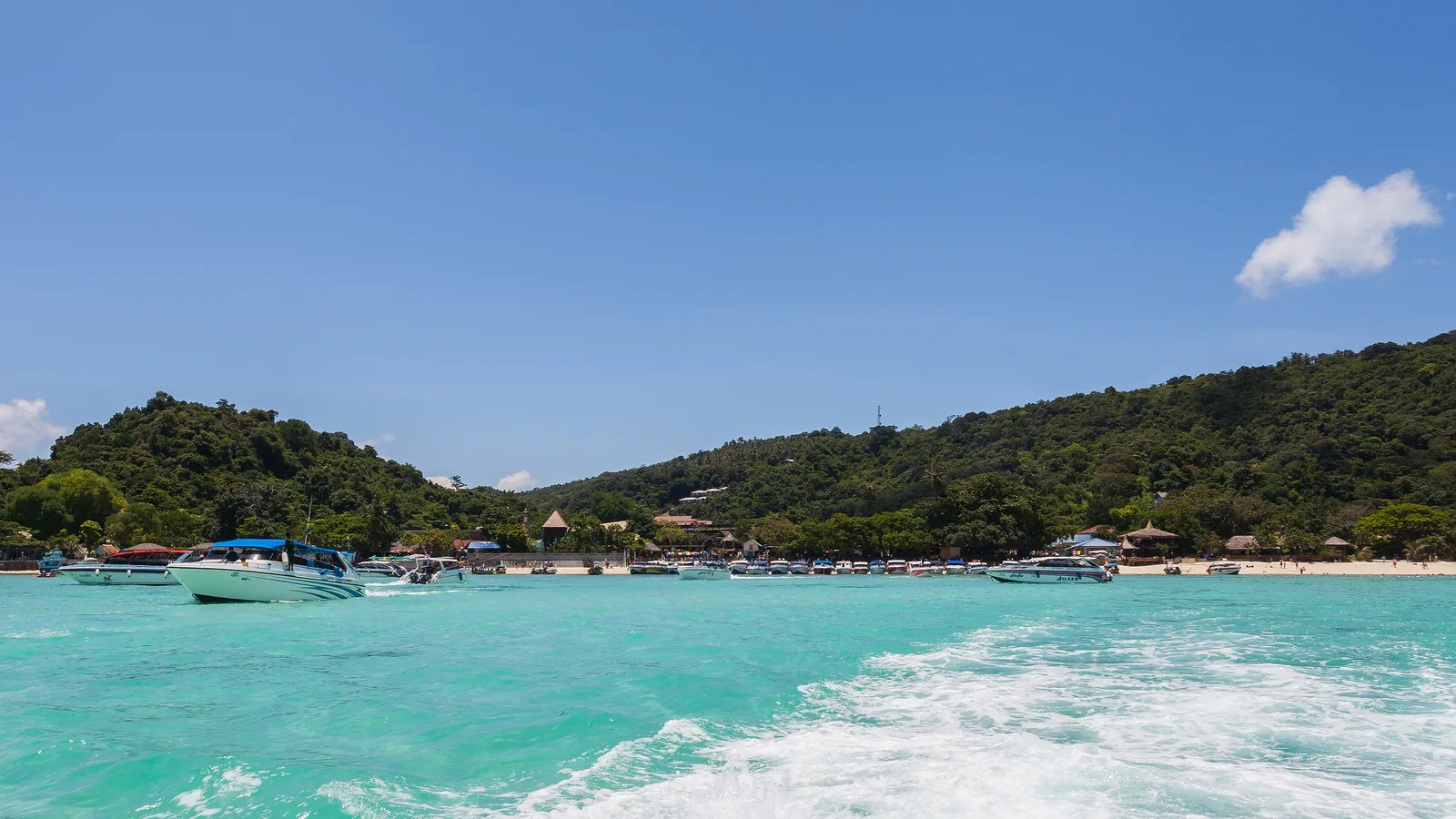
Koh Samui and Phuket: well covered. Koh Phangan: decent in the main areas, patchy on the less-developed north and west coasts. Koh Tao: spotty, especially at popular dive sites away from town. Smaller islands off the coast of Krabi or the Trang archipelago: expect limited connectivity regardless of which plan you have. This is not a function of eSIM vs physical SIM; the towers just aren't dense there.
See current pricing and plan options on the Thailand eSIM page.
Frequently asked questions
How much data do I need in Thailand?+
Active exploring with constant Google Maps uses about 1 to 2 GB per day, while a quieter beach stay with resort WiFi is closer to 500 MB per day. Add another 1 to 2 GB per day for social media and video.
Should I buy a Thailand eSIM or a local SIM?+
For trips under a week, or to arrive connected immediately, an eSIM is more convenient. For two weeks or more, a local SIM from a 7-Eleven or airport counter, around 300 to 400 THB, can be better value if you do not mind the queue and passport check.
Is eSIM coverage good on the Thai islands?+
Koh Samui and Phuket are well covered. Koh Phangan is patchy on the north and west coasts, Koh Tao is spotty away from town, and smaller islands have limited connectivity regardless of which plan you use.